Announcement
Hard Quiz: The Story Behind Tom Gleeson's ABC Comedy Quiz Show
Hard Quiz has turned specialist knowledge, brutal scoring and Tom Gleeson's combative comedy into one of the ABC's enduring quiz formats.
What began as an idea from Gleeson's manager, Kevin Whyte, grew from the spirit of Hard Chat into a television franchise with a Gold Logie-winning host, a children's spin-off and an international adaptation.
What began as an idea from Gleeson's manager, Kevin Whyte, grew from the spirit of Hard Chat into a television franchise with a Gold Logie-winning host, a children's spin-off and an international adaptation.
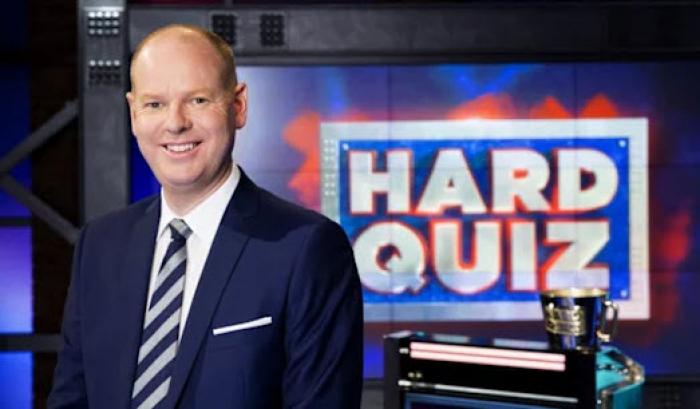
Hard Quiz
Hard Quiz is an Australian comedy quiz show hosted by Tom Gleeson and produced by Thinkative Television for the ABC. It premiered on 19 October 2016, transforming the confrontational comic style Gleeson had developed on The Weekly with Charlie Pickering into a genuine competition featuring ordinary Australians rather than celebrity panellists.The crucial idea did not originate with Gleeson himself. After years of auditioning for hosting jobs, including Family Feud, Gleeson was approached by his manager and Hard Quiz co-creator Kevin Whyte with the concept. Gleeson later recalled that the proposal immediately made sense: instead of directing his stand-up hostility towards people in the front row, he could turn it on quiz contestants.
It was a particularly good fit because Gleeson had already established the television persona required to make it work. His Hard Chat interviews on The Weekly involved subjecting politicians and celebrities to deliberately abrasive questioning rather than the usual promotional interview. Hard Quiz retained that antagonism but placed it inside a conventional quiz structure where points, eliminations and a winner genuinely matter.
Gleeson was heavily involved in developing the format and received a producer credit. The first series comprised 10 half-hour episodes. The production experimented before reaching the version that went to air, beginning with a pilot without a studio audience and subsequently making pilots with audiences before recording the broadcast episodes.
The decision to use members of the public rather than celebrities became central to the program. Contestants arrive with a specialist subject on which they consider themselves an expert, giving the writers both material for difficult questions and an obvious target for Gleeson. Subjects over the years have ranged from mainstream television, music and sport to thermodynamics and vintage Australian washing machines.
The insults are not entirely one-way. Contestants are encouraged to answer back, and some of the program's strongest comic moments occur when a player successfully turns Gleeson's ridicule against him. The production has described that freedom to retaliate as part of the appeal of the format.
Contestant selection is correspondingly important. Applicants must demonstrate genuine quiz ability before advancing through the casting process, while personality and the potential of their chosen expert subject are also considered. Gleeson has said he deliberately stays out of selecting contestants, preferring to encounter the four people chosen by the production team and discover during recording what comedy can be made from them.
Hard Quiz is recorded well ahead of transmission, with production organised efficiently enough to make a large annual run of episodes in a relatively concentrated period. Gleeson has said his own involvement in a year's worth of the program can be completed in roughly three months, although the production staff work considerably longer on casting, research and post-production.
How Hard Quiz works
Four contestants begin each episode with their own specialist subjects and a starting score of zero. The scoring system gives the competition much of its volatility: a correct answer generally adds five points, while an incorrect answer deducts five. A player can therefore move backwards almost as quickly as another moves ahead.The specialist subjects are an essential part of the show's identity. Rather than simply testing broad general knowledge, Hard Quiz gives contestants an opportunity to demonstrate an unusually deep command of a particular interest. That expertise can cover almost anything considered capable of sustaining a suitable set of questions.
The comic premise depends on taking that expertise seriously enough for the competition to work while simultaneously allowing Gleeson to ridicule it. A contestant may possess formidable knowledge of an obscure historical figure, television series, machine, sporting club or scientific subject, only to discover that becoming the resident authority also gives the host ample ammunition.
Expert Round
The Expert Round puts each contestant's nominated subject under examination. Players receive questions on their specialist areas but must buzz in to answer, and opponents have opportunities to intervene.That creates one of the program's most satisfying mechanisms: stealing. A contestant who knows the answer to somebody else's specialist question can attempt to steal it, turning another player's supposed area of expertise into a source of points.
A successful steal earns 10 points, making knowledge outside a contestant's chosen subject particularly valuable. An unsuccessful attempt costs five points. During the first series, the penalty for a failed steal was harsher at 10 points.
The round consequently tests more than memorisation of a carefully prepared topic. Contestants need sufficient general knowledge and judgement to decide when challenging somebody else's expertise is worth the risk.
Tom's Round
Tom's Round reverses the emphasis by moving away from the contestants' subjects to a topic chosen for Gleeson.Players answer multiple-choice questions using the monitors at their podiums and lock in their selections with their buzzers. The questions normally offer four possible answers, while the final question expands the field and carries double points.
By the end of the round, the contestant with the lowest score is eliminated. Their podium displays the characteristically unsympathetic verdict "Too Soft", reinforcing the show's central conceit that surviving Hard Quiz is as much a test of hardness as knowledge.
The People's Round
The remaining contestants then face general knowledge in The People's Round, also known as Against the Clock.Unlike the specialist opening, this section rewards breadth of knowledge and quick reactions. Gleeson fires out questions while contestants buzz to answer, with the clock creating pressure as scores can continue moving in both directions.
When time expires, the lowest-scoring contestant is eliminated. That leaves two players to contest the final.
The Hard-Off
An elimination cannot proceed cleanly when contestants are tied for the lowest score, so Hard Quiz resolves the problem with a Hard-Off.Gleeson gives contestants two possibilities in response to a question, often playing with the idea of which object, activity or proposition is literally or figuratively harder. The first player to buzz chooses an answer.
With two contestants, a correct answer makes that player safe and eliminates the opponent; a wrong answer has the opposite effect. Multi-player Hard-Offs can continue through further questions until the required contestant has been eliminated.
It is a functional tiebreaker dressed in the language of the show, turning the otherwise mundane business of resolving equal scores into another opportunity to reinforce the Hard Quiz identity.
The final Hard Quiz
The final two contestants return to the subjects they know best.They alternate questions on their specialist areas in a structure resembling a penalty shootout. After five questions each, the contestant with the stronger result wins. If their scores remain level, further specialist questions can be used before the contest moves to a numerical tiebreaker based on Gleeson's nominated subject.
In Tom's Tiebreaker, both finalists estimate the answer to a numerical question, with victory going to whoever comes closest.
The champion receives the program's deliberately excessive trophy, the Big Brass Mug. Its combination of mock grandeur and absurdity neatly reflects the program itself: contestants have undertaken a legitimate knowledge contest, endured elimination rounds and public ridicule, all for the right to take home an enormous brass drinking vessel.
Winning contestants are also given the final word, signing off with the show's catchphrase: "Thanks for playing, hard."
Special "Battle of the Duds" editions have pushed the joke further by awarding a Big Brass Mug with a hole in its bottom.
Tom Gleeson and the Gold Logie
Hard Quiz became entangled with one of the most unusual publicity campaigns in Australian television when Gleeson targeted the Gold Logie.He had already disrupted the awards conversation in 2018 by campaigning for Family Feud presenter Grant Denyer. Gleeson then pursued television's publicly voted top individual honour himself in 2019, treating the campaign as an extended satire of awards-season self-promotion.
On 24 May 2019, he announced that he was stepping down from Hard Quiz. The apparent cancellation soon became part of the joke. After his Gold Logie nomination was announced, Gleeson declared that he would "un-axe" Hard Quiz if viewers gave him the award, effectively presenting the program as a hostage to his campaign.
The stunt generated considerable attention and controversy, particularly because Gleeson openly mocked the institution whose highest prize he was seeking.
It worked.
Gleeson won the 2019 Gold Logie for Most Popular Personality on Australian Television. His acceptance speech continued the uneasy mixture of ridicule and appreciation that had defined his campaign.
Hard Quiz duly survived. By the end of July, Gleeson was discussing its return, and the 2020 production substantially increased the number of episodes. The fifth season ultimately became a 41-episode run, compared with 10 episodes in the first season and 20 in each of the next three.
The cancellation of the 2020 Logies during the COVID-19 pandemic also produced an unexpected consequence: Gleeson remained the reigning Gold Logie winner far longer than anticipated. He later acknowledged that the publicity surrounding the award had introduced new viewers to Hard Quiz.
Hard Quiz Kids
The format eventually produced a younger offshoot, Hard Quiz Kids, after the concept had previously been tested as a special.The first full series premiered on ABC Family and ABC iview on 8 June 2024, with contestants aged roughly 10 to 13 bringing specialist subjects every bit as particular as those selected by the adults.
Gleeson remained host and, rather than abandoning the adversarial style that made the original successful, adapted it for younger contestants. The children were also given room to retaliate, preserving the verbal contest between host and players.
The first episode demonstrated the range of childhood expertise the format could accommodate, with contestants specialising in birds of prey, Greek mythology, Minecraft and the wives of Henry VIII. Across the series, subjects ranged from Taylor Swift and Ninjago to Anne Frank, space travel, Fire Rescue Victoria and Puffing Billy Railway.
The prize remained the Big Brass Mug.
A second season followed in October 2025. Its specialist subjects included Bluey, cassowaries, Harry Styles, Star Trek, elephants and Australian politics, with four rounds adapted for the junior competition.
Hard Quiz Kids showed why the underlying format could survive a change of age group. Its fundamental ingredient is not simply difficult general knowledge but the enthusiasm people bring to subjects they have chosen themselves. A 10-year-old with exhaustive knowledge of a favourite subject can therefore occupy essentially the same role as an adult enthusiast on the original program.
Hard Quiz games
The television format has also moved into tabletop trivia.University Games released Hard Quiz The Game, allowing players to reproduce elements of the television competition at home. Designed for three to six players, it draws particularly on the program's mixture of expert knowledge and general trivia rather than functioning as a conventional collection of unrelated quiz questions.
A faster edition, Hard Quiz The Fast Game, subsequently expanded the merchandise associated with the program.
The existence of a commercial game was a natural extension for a television format built around recognisable rounds, scoring and specialist knowledge. Unlike many comedy programs, Hard Quiz already contains a complete game structure beneath the jokes.
Hard Spel in the Netherlands
Hard Quiz also became an Australian television format export.In July 2020, the Netherlands became the first country to launch an overseas adaptation. The Dutch-language Hard Spel - effectively "Hard Play" - premiered on public broadcaster NPO 1 through BNNVARA, with comedian Richard Groenendijk taking the Gleeson role.
The series was produced in the Netherlands by SkyHighTV. Groenendijk, an established comedian, actor and presenter, described it as his first job as a quizmaster and praised the original Australian format.
Like Hard Quiz, Hard Spel featured four contestants with specialist subjects. Contestants faced questions about their own areas and those of their opponents before moving through further rounds, including a section built around Groenendijk's chosen topic and a fast general-knowledge component.
The Dutch version demonstrated that the format was not entirely dependent on Gleeson himself, even though his comic personality had been fundamental to creating the Australian original. What could be exported was the structure surrounding that personality: genuine experts, difficult questions, an abrasive comedian as quizmaster and a competition in which knowing a great deal about something obscure is simultaneously impressive and an invitation to be mocked.
Why the format has lasted
Hard Quiz works because it does not force viewers to choose between comedy and a legitimate quiz.The questions matter. Contestants are selected partly because they can actually answer them, specialist subjects are researched deeply enough to challenge genuine enthusiasts, points can be lost as well as won and elimination has real competitive consequences.
At the same time, the show refuses the polite conventions traditionally associated with quiz hosting. Gleeson does not pretend every contestant has made an excellent choice of subject, congratulate them endlessly or disguise a poor performance. The host is there to make the experience harder.
Crucially, the contestants understand the arrangement. They can challenge Gleeson, mock him and occasionally deliver the line that gets the biggest reaction from the studio audience. That exchange prevents the format from becoming simply a comedian insulting members of the public.
It also explains why Kevin Whyte's original idea proved so effective. Hard Quiz did not require Gleeson to invent a new television persona when he became a game-show host. It found a game show capable of accommodating the comic persona he already had.
After years of failed pilots and unsuccessful auditions for other hosting jobs, including being passed over for Family Feud, Gleeson finally landed a program built around the things he did particularly well: asking questions, reacting quickly, mocking people and giving them enough room to mock him back.
The result took the aggression of Hard Chat, combined it with the obsessive knowledge of ordinary Australians and turned an enormous brass mug into one of Australian television's more recognisable quiz prizes.
Update Page Upgrade Advertising
→ Tags: Hard Quiz, Tom Gleeson, Hard Quiz ABC, Hard Quiz Kids, Hard Chat, Kevin Whyte, Big Brass Mug, Hard Quiz format, Australian quiz shows, OZ


